

Best Programming Languages for Web Development 2026
Best Programming Languages for Web Development 2026. web development landscape is evolving at a breakneck pace. As we approach 2026, the focus has shifted from just “making websites work” to creating hyper-performant, AI-integrated, and highly secure web applications.
If you are a student, a career changer, or a developer looking to stay relevant, choosing the right stack is critical. This guide breaks down the Best Programming Languages for Web Development in 2026, analyzed by market demand, performance, and ecosystem growth.
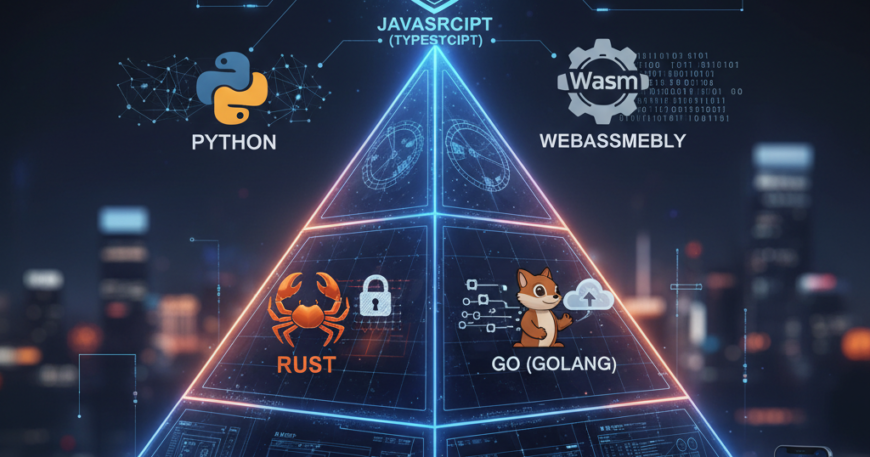
1. TypeScript: The Industry Standard
By 2026, TypeScript has effectively superseded “Vanilla” JavaScript for large-scale enterprise applications. While JavaScript remains the foundation of the web, TypeScript’s ability to catch errors during development makes it indispensable.
- Why it’s a winner in 2026: As web apps become more complex (with AI and 3D elements), static typing is no longer optional—it is a necessity for maintainable code.
- Key Frameworks: React, Next.js, Angular, and Vue 3.
- Best For: Full-stack development, complex Dashboards, and SaaS products.
2. Python: The King of AI-Driven Web Apps
Python’s dominance isn’t just in Data Science anymore. In 2026, every “modern” website has some form of AI—be it a chatbot, personalized recommendation engine, or automated content generator. Python is the primary bridge between these AI models and the web.
- The Rise of FastAPI: While Django remains a powerhouse for “batteries-included” projects, FastAPI has become the go-to for building high-performance APIs that connect frontend interfaces to machine learning models.
- Ecosystem: Libraries like PyTorch and TensorFlow integrate seamlessly with web backends.
- Best For: AI/ML integrated websites, backend APIs, and automation scripts.
3. Rust: Performance and WebAssembly (WASM)
Rust is no longer a “niche” language for systems programmers. In 2026, it is a top-tier choice for web developers who need extreme performance.
- The WebAssembly Revolution: Rust is the preferred language for WebAssembly (WASM). This allows developers to run high-performance code (like video editors, 3D games, or image processors) directly in the browser at near-native speeds.
- Safety First: Rust’s “borrow checker” ensures memory safety, eliminating common bugs that lead to security vulnerabilities.
- Best For: High-performance web tools, browser-based gaming, and security-critical applications.
4. Go (Golang): The Cloud-Native Backend
Created by Google, Go has become the backbone of the modern “Cloud-Native” web. As companies move toward microservices and serverless architectures in 2026, Go’s simplicity and concurrency features stand out.
- Concurrency (Goroutines): Go can handle thousands of simultaneous connections with very low memory overhead, making it perfect for real-time applications like chat apps or live streaming platforms.
- Fast Compilation: It offers the speed of C++ but with a much simpler syntax, allowing dev teams to deploy faster.
- Best For: Microservices, cloud-based infrastructure, and real-time streaming services.
5. SQL: The Unsung Hero of Data
While not a “web” language in the traditional sense, you cannot be a high-level web developer in 2026 without mastering SQL. As data privacy laws (like GDPR 2.0) tighten, how we store and query data is more important than ever.
- PostgreSQL Dominance: Postgre has become the “standard” database for 2026, supporting both structured relational data and JSON-based document storage.
- Best For: Database management, data integrity, and complex business logic.
6. PHP (Laravel): The Resilience of the Web
Critics have been calling PHP “dead” for a decade, yet in 2026, it still powers over 75% of the web. The reason? Laravel.
- The Laravel Ecosystem: Laravel has evolved into a massive ecosystem (Forge, Vapor, Echo) that allows a single developer to build and scale a massive application in record time.
- WordPress Economy: With WordPress still dominating the CMS market, PHP remains a highly profitable skill for freelancers and agency owners.
- Best For: Freelancing, Content Management Systems (CMS), and rapid MVP development.
Comparison of Best Programming Languages for Web Development 2026
| Language | Primary Role | Learning Curve | 2026 Market Demand | | :— | :— | :— | :— | | TypeScript | Frontend/Backend | Moderate | Very High | | Python | Backend/AI | Easy | Extremely High | | Rust | Performance/WASM | High | Rising | | Go | Microservices/Cloud | Moderate | High | | PHP | Full-stack/CMS | Easy | Stable |
Key Trends Shaping Web Development in 2026
To stay ahead of the curve, keep an eye on these three technical shifts:
1. AI-Augmented Coding
By 2026, developers aren’t just writing code; they are reviewing code generated by AI. Languages with clear syntax and strong typing (like TypeScript and Go) are easier for AI to assist with, making them more productive choices.
2. Edge Computing
Frameworks are moving away from centralized servers to “The Edge” (running code closer to the user). JavaScript/TypeScript remains the leader here through platforms like Cloudflare Workers and Vercel.
3. Sustainability in Code
“Green Coding” is a major trend in 2026. Languages like Rust and Go are being favored by big corporations because they require less CPU power to run, directly reducing the carbon footprint of massive data centers.
Actionable Steps: How to Choose?
- For Beginners: Start with JavaScript, then move quickly into TypeScript. This gives you the widest range of job opportunities.
- For High Salaries: Focus on Go or Rust. These roles are harder to fill and often command premium salaries in fintech and infrastructure.
- For Entrepreneurs: Master Python (FastAPI) and TypeScript (Next.js). This combination allows you to build modern, AI-ready apps faster than any other stack.
- For Freelancers: Stick with PHP (Laravel) and JavaScript. The sheer volume of small-to-medium business projects in this space is unmatched.
Conclusion
In 2026, the “best” language isn’t about which one has the coolest syntax—it’s about which one solves the most complex problems efficiently. TypeScript and Python remain the safest bets for most developers, while Rust and Go represent the frontier of performance and scalability.
The most important skill isn’t the language itself, but the ability to learn how to learn. The tech will continue to shift, but the fundamentals of logic, data structures, and user experience will remain eternal.